Vitamin D and CLL
Published 2026-02-10 · cll · MyCBC Blog
Vitamin D and CLL: What the Research Shows and What Patients Should Know
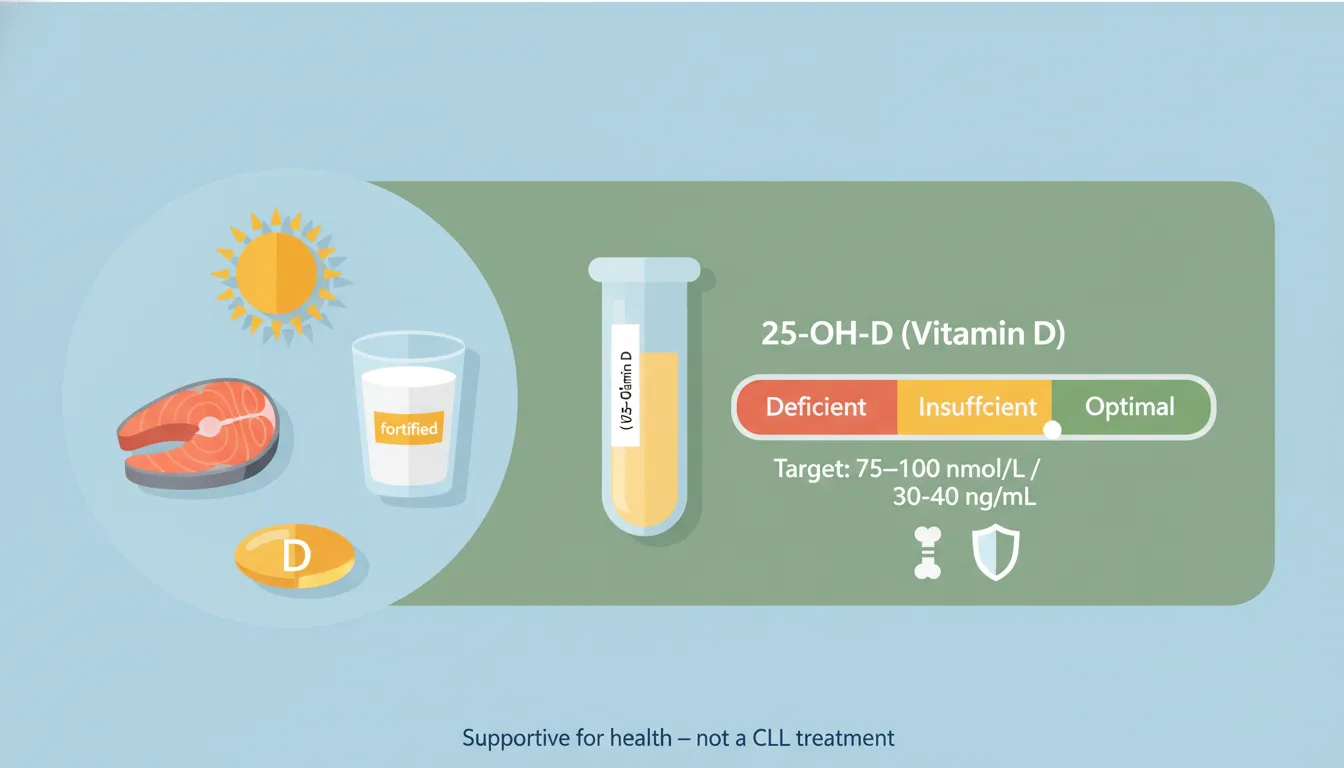
For people living with chronic lymphocytic leukemia (CLL), especially those on watch and wait, it’s natural to look for safe ways to support overall health and possibly influence how the disease behaves over time. One nutrient that comes up frequently in both research and patient discussions is vitamin D.
Vitamin D is not a treatment for CLL, and it is not proven to prevent progression. However, low vitamin D levels are common in people with CLL, and research suggests deficiency may be linked with poorer outcomes. Maintaining adequate vitamin D levels is widely considered sensible for general health and may play a supportive role during watch and wait.
Here’s what we currently know.
What Is Vitamin D?
Vitamin D is a fat-soluble vitamin that functions more like a hormone in the body. It plays an important role in:
-
Bone strength and calcium balance
-
Immune system regulation
-
Muscle function
-
Inflammation control
Vitamin D comes from:
-
Sunlight exposure
-
Certain foods (fatty fish, fortified dairy)
-
Supplements
Because modern lifestyles limit sun exposure, deficiency is common — including among people with blood cancers.
Why Vitamin D Matters in CLL
Several studies have shown that low vitamin D levels are common in people with CLL and are associated with less favourable disease features.
Observational research has found that:
-
Low vitamin D is linked to shorter time to first treatment
-
Deficiency is associated with more aggressive disease markers
-
People with adequate vitamin D levels tend to have longer treatment-free survival
Importantly, these are associations, not proof that vitamin D changes the disease itself. Still, the consistency of findings has made vitamin D an area of active interest in CLL research.
Why Low Vitamin D Might Matter Biologically
There are plausible biological reasons vitamin D could be relevant in CLL:
-
CLL cells express vitamin D receptors, suggesting vitamin D may interact with leukemia biology
-
Vitamin D influences immune regulation and inflammation, both central to CLL
-
Adequate vitamin D supports normal bone marrow and immune function
These mechanisms support the idea that vitamin D status may reflect — or influence — disease behaviour, even if it is not a direct therapy.
What Experts Say
Haematology experts generally agree on a balanced position:
-
There is no prospective clinical trial proving vitamin D supplementation delays CLL progression
-
Vitamin D supplementation is safe, low-cost, and beneficial for general health
-
Correcting deficiency is reasonable, even if CLL-specific benefit is unproven
In short: vitamin D isn’t a CLL treatment, but maintaining healthy levels makes sense.
What Vitamin D Level Should My Blood Be?
Vitamin D is measured using a blood test called 25-hydroxyvitamin D (25-OH-D).
Target ranges are consistent worldwide, though units differ by country.
If reported in nmol/L (Australia, UK, Europe, Canada):
-
Deficient: below 50 nmol/L
-
Insufficient: 50–74 nmol/L
-
Adequate / Optimal: 75–125 nmol/L
-
Potentially excessive: above 150 nmol/L
-
Toxic (rare): above 250 nmol/L
If reported in ng/mL (United States):
-
Deficient: below 20 ng/mL
-
Insufficient: 20–29 ng/mL
-
Adequate / Optimal: 30–50 ng/mL
-
Potentially excessive: above 60 ng/mL
-
Toxic (rare): above 100 ng/mL
(Conversion: 1 ng/mL = 2.5 nmol/L)
A Practical Target for CLL
Many clinicians aim for a stable mid-normal range, roughly:
-
75–100 nmol/L (30–40 ng/mL)
There is no evidence that pushing levels higher improves CLL outcomes, and excessive levels can be harmful.
Should People With CLL Take Vitamin D?
When Supplementation Makes Sense
-
Documented vitamin D deficiency or insufficiency
-
Limited sun exposure
-
Bone health concerns
-
General health optimisation during watch and wait
When Caution Is Needed
-
Very high baseline vitamin D levels
-
Kidney disease or high calcium levels
-
High-dose supplementation without monitoring
Vitamin D supplementation should ideally be guided by blood testing, not assumptions.
Liquid vs Tablet Vitamin D: Does Form Matter?
For most people with CLL, liquid vitamin D is not superior to tablets or capsules.
What matters more than the form:
-
Taking vitamin D with food containing fat
-
Consistent dosing
-
Correct dose based on blood levels
Liquid drops can be helpful for:
-
People who struggle with swallowing
-
Those needing very precise dose adjustments
Oil-based soft-gel capsules are equally effective and often simpler for long-term use.
Safety and Monitoring
Vitamin D is generally safe, but excessive supplementation can cause:
-
High calcium levels
-
Kidney issues
-
Fatigue and nausea
That’s why it’s recommended to:
-
Test levels before supplementing
-
Re-test periodically
-
Adjust doses gradually
Bottom Line
Vitamin D is not a treatment for CLL, but it matters.
For people with CLL, especially on watch and wait:
-
Low vitamin D is common and associated with poorer outcomes
-
Correcting deficiency is reasonable and low risk
-
Maintaining a healthy, stable level supports immune and bone health
-
More is not better
The goal is balance — not deficiency, not excess.
Vitamin D won’t change the diagnosis, but it can help your body cope better while you live with it.