Vitamin B12 and CLL/SLL
Published 2026-02-13 · MyCBC Blog
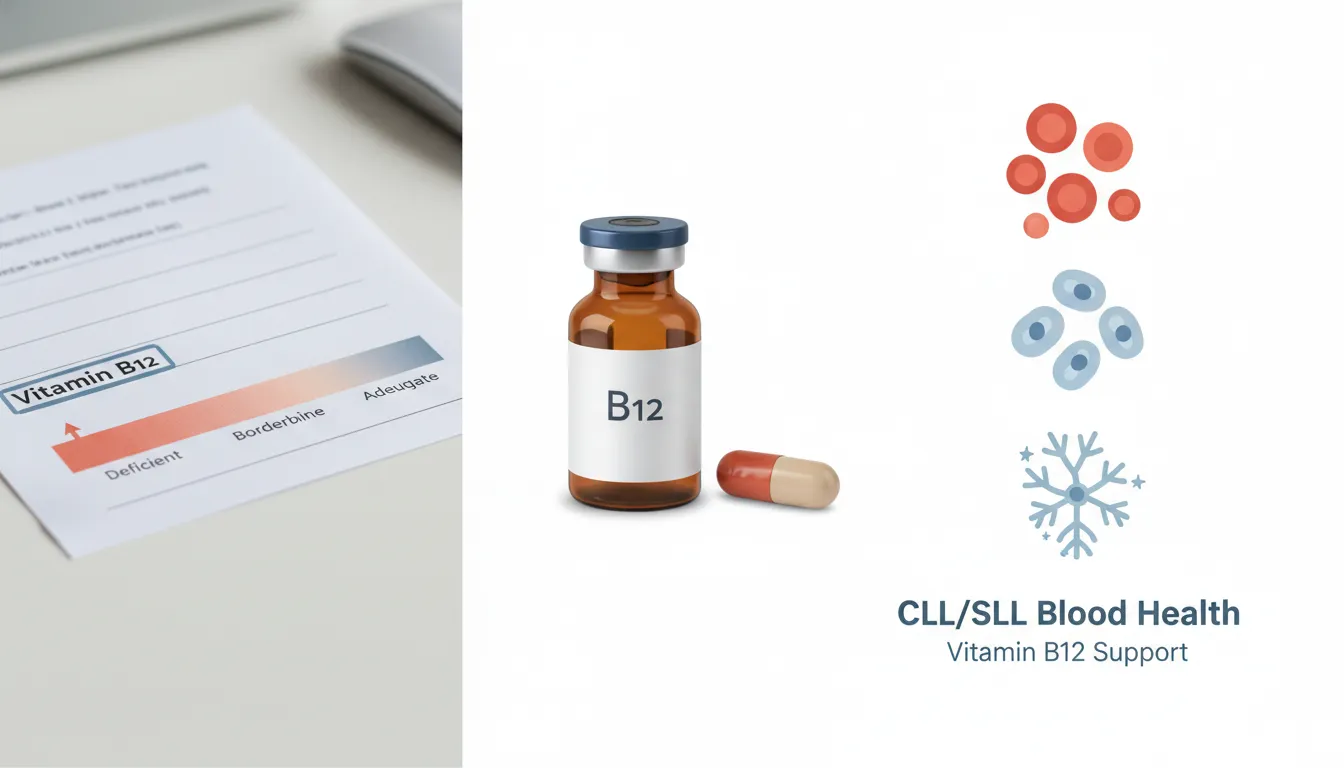
Vitamin B12 and CLL/SLL: Why Levels Matter and What to Know
People living with chronic lymphocytic leukemia (CLL) or small lymphocytic lymphoma (SLL) often keep a close eye on their blood results. Alongside white blood cells, haemoglobin, and platelets, another marker that frequently appears is vitamin B12.
Vitamin B12 plays a vital role in blood cell production, nerve health, and energy levels. While it is not a treatment for CLL or SLL, maintaining adequate B12 levels can help manage symptoms, clarify blood results, and support overall wellbeing.
Here’s what to know about vitamin B12 and its relevance in CLL and SLL.
What Is Vitamin B12?
Vitamin B12 (cobalamin) is a water-soluble vitamin essential for:
-
Red blood cell formation
-
DNA synthesis
-
Proper nerve function
-
Energy metabolism
B12 is obtained mainly from animal-based foods such as meat, fish, eggs, and dairy. Because the body cannot make B12, deficiency can develop due to poor intake or impaired absorption.
Why Vitamin B12 Matters in CLL and SLL
CLL and SLL affect the blood and bone marrow, where all blood cells are produced. Vitamin B12 is particularly important because low B12 can cause blood abnormalities that resemble or worsen those seen in CLL/SLL.
Low B12 can contribute to:
-
Anaemia
-
Fatigue and weakness
-
Brain fog or memory issues
-
Numbness or tingling in the hands and feet
If unrecognised, B12 deficiency can make symptoms appear more severe or suggest disease progression when the cause is actually nutritional.
Is Low Vitamin B12 Common?
Yes. Vitamin B12 deficiency is relatively common, especially in:
-
Older adults
-
People with digestive or absorption issues
-
Those taking acid-reducing medications or metformin
-
People who eat little or no animal protein
In people with CLL or SLL, fatigue or anaemia may be attributed solely to the disease when B12 deficiency is also playing a role.
Can Vitamin B12 Help CLL or SLL?
There is no evidence that vitamin B12 treats or slows CLL or SLL.
However, adequate B12 levels help:
-
Support normal bone marrow function
-
Improve symptoms related to deficiency
-
Ensure blood results are interpreted accurately
Correcting a deficiency won’t change the leukemia, but it can significantly improve quality of life.
What About High Vitamin B12 Levels?
Some people with blood cancers have elevated B12 levels on blood tests. This is often due to changes in B12-binding proteins related to white blood cells or liver metabolism, not excessive intake.
High B12 levels alone usually do not require treatment and should be interpreted in clinical context.
What Is a Healthy Vitamin B12 Level?
Vitamin B12 is measured in either pmol/L or pg/mL.
pmol/L
-
Deficient: below 150
-
Borderline: 150–250
-
Adequate: 250–700
pg/mL
-
Deficient: below 200
-
Borderline: 200–300
-
Adequate: 300–900
Many clinicians prefer levels comfortably above the lower limit, especially if symptoms are present.
Should People With CLL or SLL Supplement B12?
Supplementation may be appropriate if:
-
Blood tests show deficiency or borderline levels
-
Symptoms of deficiency are present
-
Dietary or absorption risks exist
Supplementation should be guided by blood results, not taken automatically.
Oral B12 is effective for most people. Injections are reserved for severe deficiency or significant absorption problems.
Bottom Line
Vitamin B12 is not a therapy for CLL or SLL, but it is an important marker for blood health and symptom management.
For people with CLL or SLL:
-
Low B12 can worsen fatigue and anaemia
-
Correcting deficiency can improve wellbeing
-
High B12 levels usually reflect disease biology, not supplementation
Maintaining healthy B12 levels supports your body — even if it doesn’t change the disease itself.